H&M
H&M — Hennes & Mauritz — is one of the world’s largest clothing retailers, with about 4,100 stores in 81 markets. It opened in 1947 as a single women’s clothing shop in the Swedish town of Västerås. The second half of its name belonged to a hunting-equipment shop in Stockholm.
Why It Is Called H&M
For its first twenty-one years the company was called simply Hennes — Swedish for “hers” — and it sold only women’s clothing.
In 1968 its founder, Erling Persson, bought the premises and stock of Mauritz Widforss, a Stockholm retailer of hunting clothes and equipment. The purchase brought menswear into the range, and the business became Hennes & Mauritz.
The hunting gear did not last. The name did, shortened on shopfronts around the world to three characters that most of its customers never think to expand.
Hennes, Västerås, 1947
Erling Persson travelled to the United States after the Second World War and came home impressed by what he had seen there: large, efficient stores that sold a great deal of merchandise quickly and at low prices.
In 1947 he opened his own version, a women’s clothing shop in Västerås, west of Stockholm, and called it Hennes. The idea was not luxury or exclusivity. It was fashionable clothing, sold in volume, at prices ordinary people could pay.
That idea is still the company’s stated purpose, summed up in a phrase it has used for decades: fashion and quality at the best price.
A Family Business on the Stock Exchange
Hennes opened its first store outside Sweden, in Norway, in 1964. After the Mauritz purchase came a listing on the Stockholm Stock Exchange in 1974, and in 1976 the first store outside Scandinavia, in London.
The listing did not end family control. Erling Persson’s son, Stefan Persson, ran the company from 1982 and then chaired it for more than twenty years; his son, Karl-Johan Persson, was chief executive from 2009 and later became chairman. The Persson family has remained the controlling shareholder throughout.
That continuity shaped the company’s character. H&M has been able to take long views — and has also, at times, been slow to accept that the world around it had changed.
Fashion and Quality at the Best Price
H&M owns no factories. It designs clothes and buys them from independent suppliers, chiefly in Asia and Europe, in very large quantities. Scale lets it negotiate low prices; low prices bring the volume that justifies the scale.
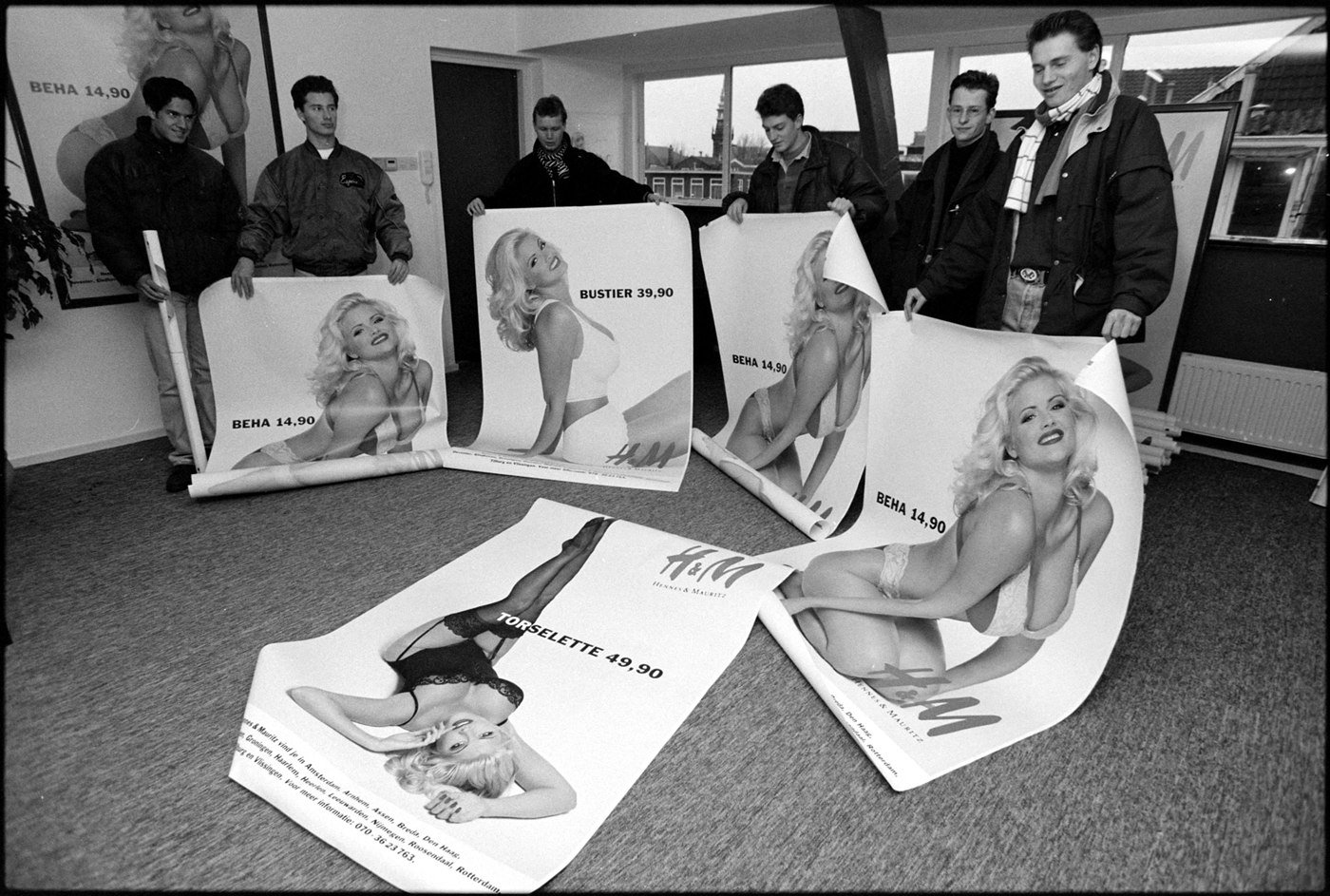
To make a low-price chain feel like fashion, it spent heavily on image: large advertising campaigns with well-known models, and shops on the most expensive streets of Europe’s cities. For a long time it was one of the most visible clothing brands in the world.
The model worked extremely well for decades. Its weakness was timing. Buying large volumes months ahead means guessing what people will want — and when the guesses are wrong, the result is shops and warehouses full of clothes nobody bought.
Karl Lagerfeld on the High Street
On 31 March 2000 H&M opened its first store in the United States, on Fifth Avenue in New York. Four years later it did something that changed fashion retail.
In November 2004 selected H&M stores offered a collection designed by Karl Lagerfeld, the creative director of Chanel. Queues formed before opening, and much of it sold out within hours. A luxury designer’s name at high-street prices turned out to be irresistible.
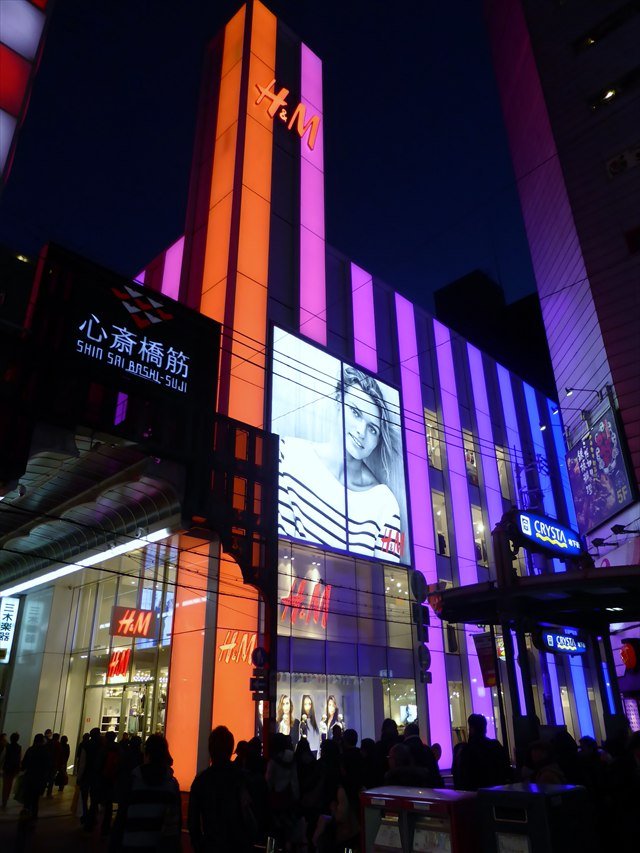
The collaboration became a formula, repeated with designers and fashion houses including Stella McCartney, Versace and Balmain. Each brought queues, press coverage and a sense of occasion that a low-price chain could not buy with advertising alone.
H&M also built brands for customers who wanted something more considered: COS, launched with a flagship on London’s Regent Street in 2007, then & Other Stories, and Arket in 2017.
Losing the Race to Zara
H&M’s great rival grew up in north-west Spain. Zara’s parent, Inditex, built its business on speed — small batches, production close to home and new designs in shops within weeks. H&M built on volume and price.
For years both approaches thrived. But as shoppers came to expect constant novelty, and online retailers pushed the pace further, the weaknesses of volume showed. Inditex overtook H&M as the world’s largest clothing retailer, and by the end of the 2010s H&M was holding a remarkable amount of unsold stock — just over $4 billion worth of clothing in 2019, by one estimate.
The problem was not only financial. Unsold clothes that are discounted, shipped elsewhere or destroyed sit awkwardly beside a company’s promises about sustainability, and critics were quick to connect the two.
The Hoodie, the Cotton and the Factories
H&M’s reputation has also been damaged by events closer to its own decisions.
In April 2013 the Rana Plaza building collapsed in Bangladesh, killing more than 1,100 people who worked in the garment factories inside. H&M, one of the largest buyers of clothing made in Bangladesh, was among the companies that signed the Accord on Factory and Building Safety that followed, which gave independent inspectors the power to act on unsafe factories.
In January 2018 its British website showed a black child modelling a green hoodie printed with the words “Coolest Monkey in the Jungle”. The backlash was immediate and international; stores in South Africa were attacked during protests, and H&M apologised and withdrew the garment.
In 2020 H&M said it had stopped buying cotton from growers in China’s Xinjiang region, citing reports of forced labour. In March 2021, after Western governments imposed sanctions over Xinjiang, that statement was circulated and denounced by China’s Communist Youth League, and H&M faced a consumer boycott in a major market.
Fewer Shops, More Profit
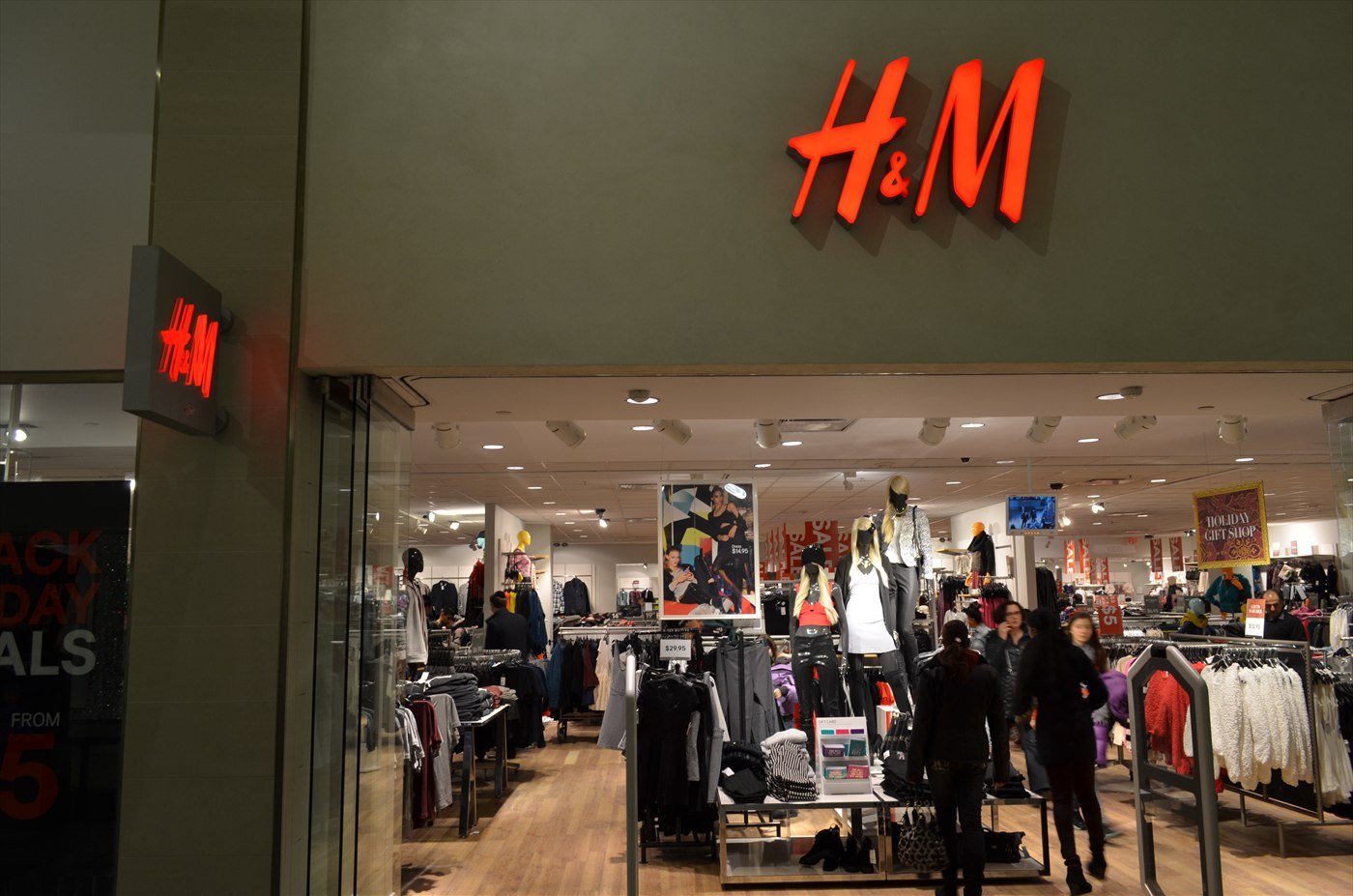
Under Helena Helmersson, chief executive from 2020 to 2024, and her successor Daniel Ervér, H&M has concentrated on profitability rather than size. The group’s store count fell from 4,465 in 2022 to 4,101 in 2025, while sales stayed broadly level and about 30 per cent came online.
In the 2025 financial year the group reported sales of about SEK 228 billion and net profit of about SEK 12.0 billion, up from SEK 3.5 billion in 2022, with around 94,700 full-time-equivalent employees. It has invested in second-hand and resale, and in 2026 set up a new design and sourcing hub in Barcelona.
What Could Still Go Wrong
Three things are worth setting down.
Squeezed from both sides. Inditex is faster and more profitable; Shein and other online-only sellers are cheaper and faster still. H&M’s middle position — slower than Zara, dearer than Shein — is an uncomfortable place to be.
Sustainability claims under scrutiny. The environmental cost of fast fashion draws growing attention from regulators, and consumer authorities have criticised the marketing of H&M’s “conscious” ranges as vague. Claims that cannot be substantiated are becoming a legal risk as well as a reputational one.
The supply chain. A company that owns no factories relies on thousands it does not control, and on the wages paid in them. Campaigners argue that the industry, H&M included, still does not pay supply-chain workers a living wage.
A dress shop in Västerås bought a hunting store so that it could sell to men. Nearly eighty years later H&M is still defined by the same instinct — to reach more people with more clothes — and by the question of whether that is still the right one.
Common Questions
What does H&M stand for?
Who founded H&M, and when?
When did H&M work with Karl Lagerfeld?
Who owns H&M?
Which brands does H&M own?
How big is H&M?
How This Was Written
Figures are as at the date of publication. H&M’s financial year ends on 30 November; corrections are welcome.
Photography is public domain or CC0 and is credited in the site’s image credits. Corrections: commissions@99founder.com.