Tata Motors
Tata Motors is one of India’s largest vehicle makers — of cars, electric cars, trucks and buses — and the owner of the British luxury brands Jaguar and Land Rover. It began in 1945 building locomotives. Since October 2025 it has been two listed companies.
The Meeting in Detroit, 1999
In 1999 Tata Motors’ passenger-car business was struggling, and the company opened talks to sell it. The most likely buyer was Ford.
A Tata team led by Ratan Tata travelled to Detroit to meet Ford’s chairman, Bill Ford. As members of the Tata side later told the story, the Americans were openly condescending, asking why an Indian truck maker had gone into cars at all. Ratan Tata came home having decided not to sell.
Nine years later the positions were reversed. Ford, heading into the worst crisis in its history, needed to sell two of its British luxury brands. The buyer was Tata Motors, and Bill Ford, by one account, told Tata that he was doing Ford a big favour.
Locomotives, Then Lorries
The company was founded by the Tata Group in 1945 as the Tata Engineering and Locomotive Company, known as TELCO, to build steam locomotives at Jamshedpur, the steel town the group had built.
Its future turned out to be on the road rather than the rails. In 1954 TELCO formed a partnership with Daimler-Benz of Germany to build commercial vehicles, and by November of that year the first trucks were leaving Jamshedpur. When the fifteen-year agreement ended in 1969, TELCO had learned enough to design and build trucks on its own.
For decades afterwards, in a closed economy where private cars were rare, Tata trucks carried much of India’s road freight. The company’s identity was commercial vehicles: heavy, simple, durable and everywhere.
India’s Own Car
India’s economy opened up in 1991, and TELCO moved into passenger vehicles — first the Tata Sierra, a utility vehicle, then the Tata Estate in 1992 and in 1994 the Tata Sumo, often described as India’s first sport-utility vehicle.
The real ambition was a car. On 30 December 1998 the company launched the Indica, a small hatchback and the first passenger car fully developed in India. Ratan Tata, chairman of the group, had championed it in the face of considerable doubt.
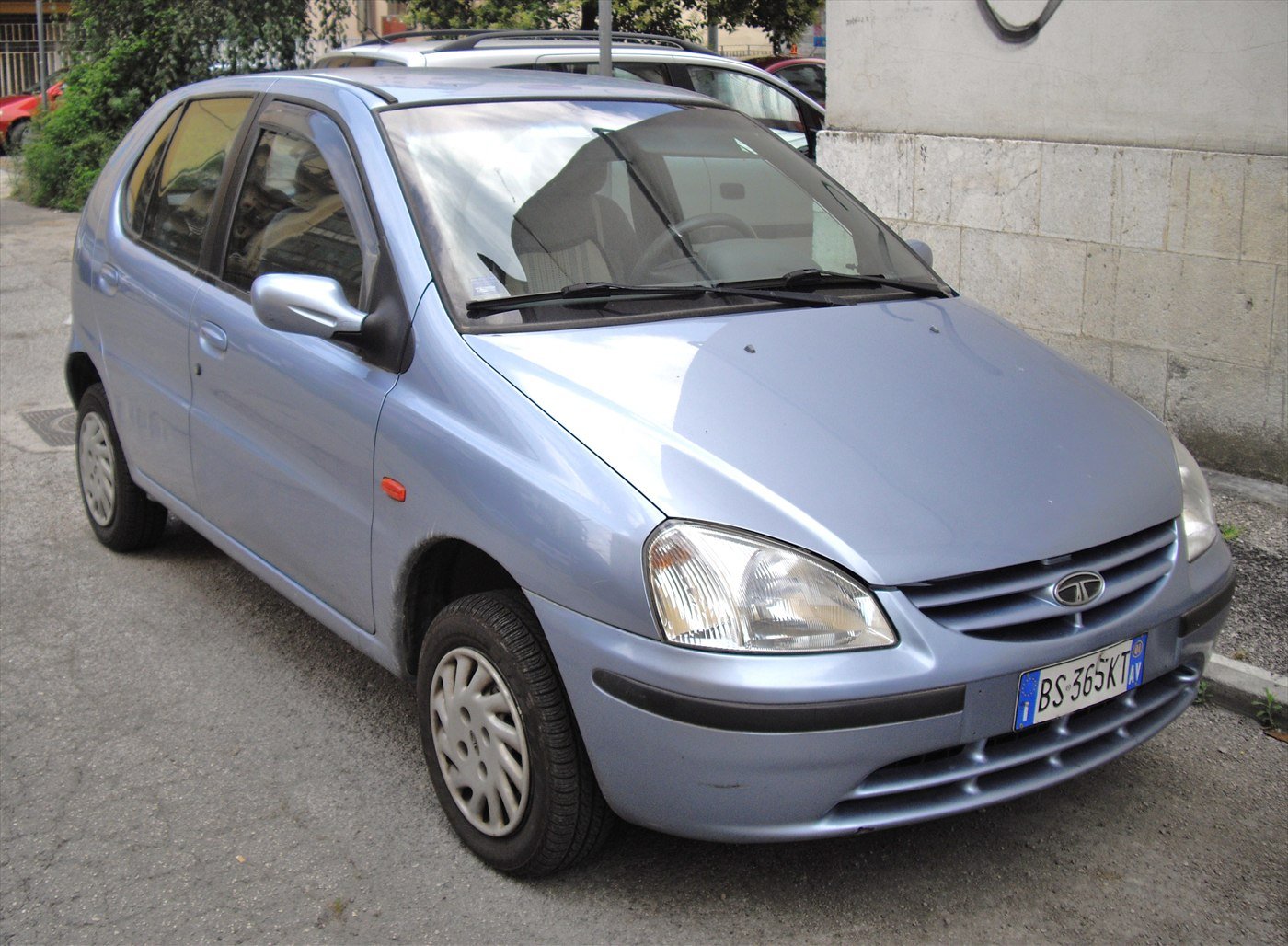
Early demand was strong. But building cars was expensive, competition from established foreign manufacturers was fierce, and within a year the passenger-vehicle business was in enough difficulty that the company was prepared to sell it — which is how a delegation came to be sitting in Ford’s offices in 1999.
In 2003 TELCO renamed itself Tata Motors.
Buying Jaguar and Land Rover From Ford
In 2004 Tata Motors bought the truck business of South Korea’s Daewoo, its first significant foreign acquisition, to reduce its dependence on the Indian market. The far larger move came four years later.
In March 2008 Tata Motors agreed to buy Jaguar and Land Rover from Ford for about $2.3 billion, completing the purchase in June. Ford had paid considerably more for the two brands when it acquired them, and had struggled to make them profitable.
The timing looked disastrous. Within months the financial crisis had crushed demand for expensive cars, and Tata had borrowed heavily to fund the deal. Many analysts expected an Indian company with no experience of luxury cars to fail where Ford had.
Instead, Tata largely left the British management to run the business, invested in new models — above all new Range Rovers — and saw demand in China and elsewhere take off. Jaguar Land Rover became, for most of the following decade, the largest source of Tata Motors’ revenue. In the year to March 2025 JLR reported revenue of about £29 billion.
The One-Lakh Car
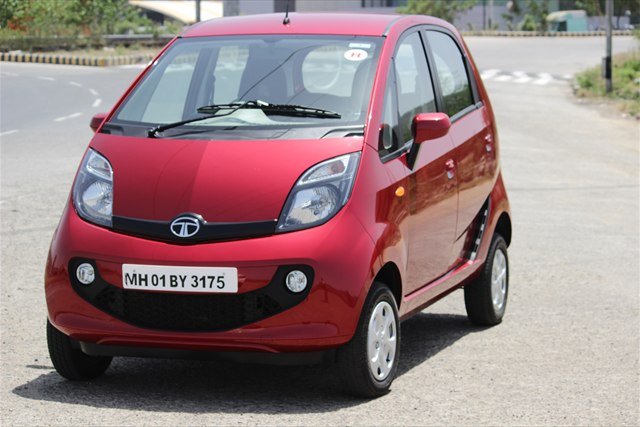
The other great bet of the period went the opposite way.
Ratan Tata wanted a safe, affordable car for Indian families who rode four to a scooter. The Nano, unveiled at the Auto Expo in New Delhi in January 2008, was promised at one lakh rupees — roughly $2,500 at the time — and billed as the least expensive production car in the world.
It was to be built at Singur in West Bengal. Protests over the land acquired for the factory became a political confrontation, and Tata abandoned the site and moved production to Sanand in Gujarat. The first Nanos reached buyers in 2009.
By then the moment had passed. Early cases of cars catching fire hurt its reputation, and the marketing had made “cheapest” the defining word for a product buyers wanted to be proud of. Sales never came close to the plan, and production ended in 2018. Ratan Tata later acknowledged that promoting it as the cheapest car had been a mistake.
An Early Lead in Electric Cars
After Ratan Tata stepped down as chairman of the group in 2012, and after the turbulent tenure and removal of his successor, Cyrus Mistry, N. Chandrasekaran took over the chairmanship of Tata Sons in 2017, and with it Tata Motors.
The domestic car business, long the weak part of the company, was rebuilt around safer and better-designed models. In December 2019 Tata unveiled the Nexon EV, an electric version of its compact SUV priced within reach of middle-class buyers.
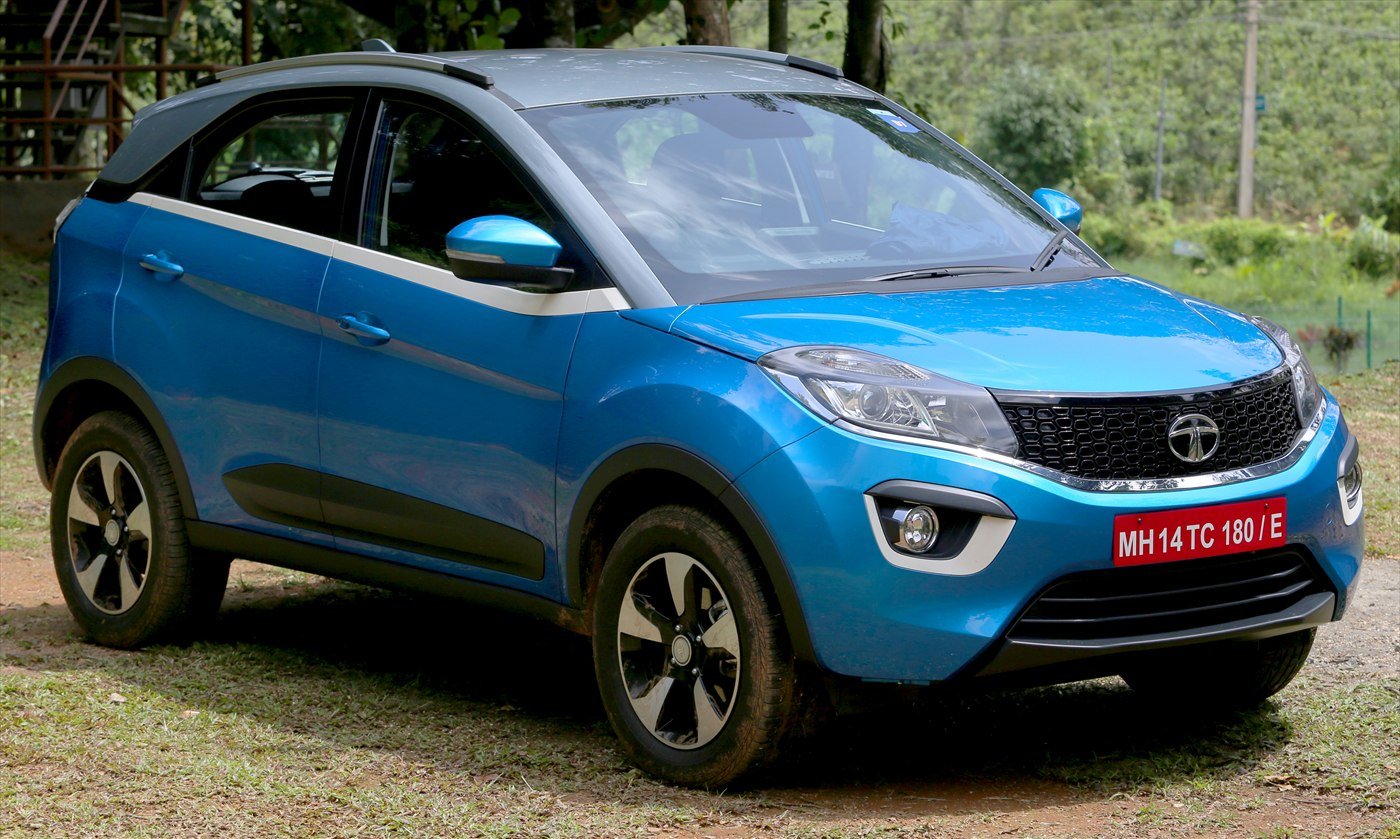
It gave Tata an early and commanding lead in India’s small but fast-growing electric-car market, well ahead of foreign rivals that had waited. In 2022 Tata also agreed to take over Ford’s factory in Sanand, after Ford decided to stop making cars in India — a detail not lost on anyone who remembered 1999.
One Company Becomes Two
In March 2024 Tata Motors announced that it would split into two listed companies. The demerger took effect on 1 October 2025. The commercial-vehicle business became a separate company that took the name Tata Motors; the original company, holding the passenger cars, the electric-vehicle business and Jaguar Land Rover, was renamed Tata Motors Passenger Vehicles.
The reasoning was that trucks and luxury cars are different businesses, with different cycles and different investors, and that each would be valued more clearly on its own.
The split came weeks after one of the worst months in JLR’s history. On 2 September 2025 it disclosed a cyberattack that had forced it to halt production and retail operations; its factories stayed shut for weeks, and it later put the direct cost at £196 million.
For the year to March 2026, Tata Motors Passenger Vehicles reported revenue of about ₹3.77 lakh crore and net profit of about ₹24,850 crore, while the commercial-vehicle company reported revenue of about ₹85,000 crore. Shailesh Chandra leads the passenger-vehicle company, and PB Balaji became chief executive of JLR in November 2025.
What Could Still Go Wrong
Three things deserve a plain statement.
Dependence on JLR. The luxury business supplies most of the passenger-vehicle company’s revenue, and it is exposed to everything that hits premium cars at once: Chinese demand, tariffs, and the cost of remaking Jaguar as an all-electric brand. The 2025 cyberattack showed how much can stop at once.
Competition at home. Tata’s early lead in electric cars has drawn well-funded rivals, and India’s car market is contested by Maruti Suzuki, Hyundai, Mahindra and Chinese-owned brands. An early lead is not the same as a permanent one.
Two companies, one name. After the demerger, “Tata Motors” on the stock exchange means the truck maker, while the cars sit in a company with a longer name. Investors and customers will take time to adjust.
In 1999 Tata Motors went to Detroit to sell its car business and came home with it. It remains the most consequential decision the company never made.
Common Questions
When was Tata Motors founded?
How did Tata Motors buy Jaguar Land Rover?
Did Tata really try to sell its car business to Ford?
What happened to the Tata Nano?
What was the Tata Motors demerger?
How big is Tata Motors?
How This Was Written
Figures are as at the date of publication. Indian financial years end in March; corrections are welcome.
Photography is public domain or CC0 and is credited in the site’s image credits. Corrections: commissions@99founder.com.