Founder profileIndustry & conglomerates · Mumbai
Fact-checked profile
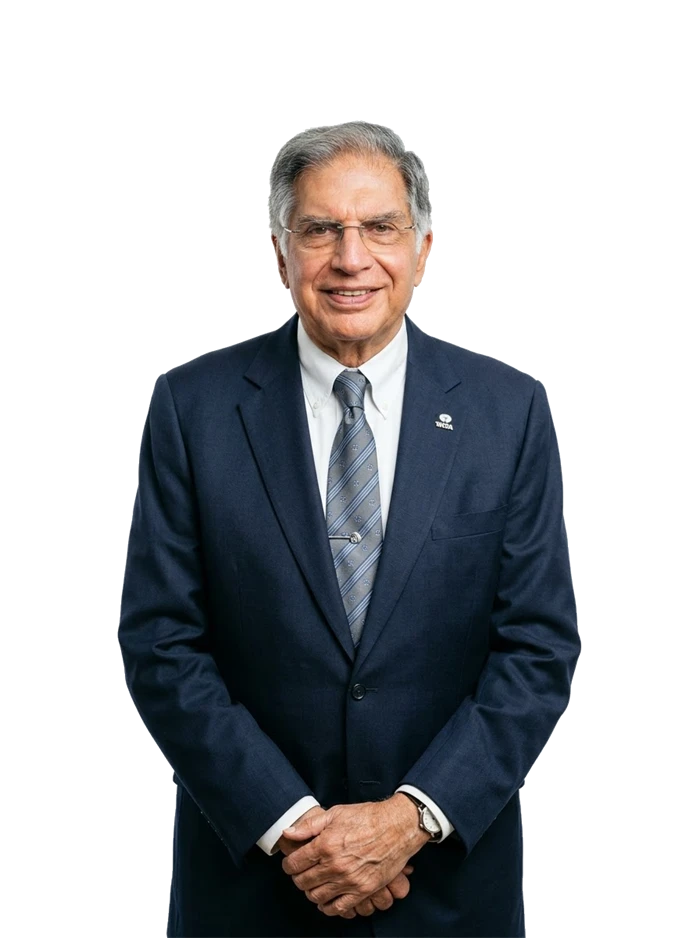
The life of
Ratan Tata
Chairman, Tata Sons
1991–2012
Trained as an architect, sent to shovel limestone on the shop floor, and chairman for twenty-one years of a group that is two-thirds owned by charity.
28 December 1937 – 9 October 2024
Two rupees in every three
of the dividend go to charity.
- 21Years as
chairman - 66%Owned by
charitable trusts - 3British institutions
bought
Tetley, Corus, Jaguar.
What he boughtLife & record
At a glance
- BornBombay, then British India28 Dec 1937
- DiedMumbai, aged 869 Oct 2024
- EducatedCornell (architecture, 1962); Harvard AMP, 1975Architect
What the record covers
- Tata Sons
- Tata Steel
- Tata Motors
- Tata Tea
- Taj Hotels
- Tetley
- Corus
- Jaguar Land Rover
- Nano
- Tata Trusts
Six turns
-
01
Cornell, 1962
He read architecture, wanted to stay in America, and came back because his grandmother was unwell.
-
02
Jamshedpur
The heir apparent started on the shop floor at Tata Steel, shovelling limestone in overalls.
-
03
25 March 1991
Chairman of a federation, not a group: he imposed a retirement age and bought the centre its authority back.
-
04
2000–2008
Tetley, then Corus at about $12 billion, then Jaguar Land Rover from Ford for roughly $2.3 billion.
-
05
10 January 2008
The Nano, at one lakh rupees — the cheapest production car in the world. It did not sell.
-
06
26 November 2008
The Taj Mahal Palace attacked. The Palace wing took twenty-one months; salaries were paid throughout.
Two rupees in every three of the dividend leave the business and go to hospitals, universities, research institutes and rural work.
Chairman for twenty-one years.
No heir, by design.
The trusts hold the shares.
Ratan Naval Tata ran India’s largest industrial group for twenty-one years, bought three of Britain’s best-known companies, and died on 9 October 2024 owning almost none of it.
The Group That Owns Itself
Start with the fact that explains the rest of him, because almost nothing about the Tata Group makes sense without it.
Tata Sons is the holding company that sits above the whole group. Roughly two-thirds of it — about 66 per cent — is owned by charitable trusts: Sir Dorabji Tata and Allied Trusts, and Sir Ratan Tata Trust. Not by a family. Not by a founder’s heirs. By philanthropy.
That means when the group makes money, two rupees in every three of the dividend leave the business and go to hospitals, universities, research institutes and rural work. The arrangement predates Ratan Tata by decades. What he did was run the thing for twenty-one years without breaking it.
It is worth sitting with the arithmetic, because it is the opposite of how a conglomerate normally ends. A man spends two decades quadrupling a company’s reach across four continents, and at the end of it his personal stake in the parent is negligible. He was, by the standards of the people he negotiated against, not a rich man.
Bombay, 1937
He was born on 28 December 1937 in Bombay, then British India, to Naval Tata and Sooni Commissariat.
In 1948, when he was ten, his parents separated. He and his younger brother Jimmy were raised by their grandmother, Navajbai Tata — the widow of Ratanji Tata — who formally adopted them. His father later remarried, giving him a half-brother, Noel Tata; his mother remarried too, giving him two half-sisters.
A separation in a prominent Parsi family in 1948 was not a private matter, and he spoke later about being taunted for it at school. The household he grew up in afterwards was his grandmother’s, and the values he cited for the rest of his life — dignity, restraint, not answering back in public — he attributed to her rather than to either parent.
School was Campion in Mumbai, then Cathedral and John Connon, then Bishop Cotton in Shimla, then Riverdale Country School in New York, where he finished in 1955.
The Architect Who Took the Shop Floor
Here is the detail most summaries skip: Ratan Tata was not trained in business.
He read architecture at Cornell and took his degree in 1962. He has said he wanted to stay in the United States and practise. He came back because his grandmother was unwell.
He joined the Tata Group the same year, and he did not join it at a desk. He was sent to Tata Steel at Jamshedpur and put on the shop floor, shovelling limestone and handling the blast furnaces alongside the workforce. The heir apparent of the house spent his first years in the plant, in overalls.
The architecture training was not wasted, and he said so. An architect is taught to hold a whole structure in mind while resolving one detail of it, and to care about how a thing looks to the person standing in front of it. Both habits show up later — in the Indica, in the Nano, in his personal involvement with product design at a level chairmen usually delegate.
He completed Harvard Business School’s Advanced Management Program in 1975, thirteen years into the job. The formal management education came after the shovel, not before it.
The Jobs Nobody Wanted
Through the 1970s he was handed the group’s problem children.
The main one was NELCO, an electronics company losing money in a licence-controlled economy. He was given it to turn around and did improve it, before the market collapsed under him. He was also put onto Empress Mills, a textile operation that eventually closed.
This is the part of the record that gets flattened in tributes, and it should not be. For most of his forties, the future chairman of the Tata Group was running small, struggling units and not obviously succeeding at it. His reputation inside the house was not that of a certain winner. It was that of the founder’s adopted grandson being given things to learn on.
What those years bought him was the one qualification a shop floor cannot give: he had personally been inside a business that failed, and knew what it felt like from the middle of it.
1991, and the Barons
He became chairman of Tata Sons on 25 March 1991, succeeding J. R. D. Tata, who had held the post for more than half a century.
The group he inherited was not really a group. It was a federation. The big companies — steel, motors, chemicals, hotels — were run by long-serving chiefs who had built genuine empires and answered to the centre when it suited them. Tata Sons owned relatively little of them. The new chairman was, on paper, in charge of a name.
His first fight was internal, and it was unglamorous. He pushed through a retirement age. He raised Tata Sons’ shareholdings in the operating companies. He required them to pay for the Tata brand and to submit to a common identity. One by one, the satraps left.
It made him unpopular for years, and it is the reason there was a group to take global at all. A federation cannot make a twelve-billion-dollar bid. A company can.
The same year he took over, India began dismantling the licence system. The timing was not his doing. What he did with it was.
Tetley, Corus, Jaguar
Three acquisitions changed what the Tata name meant outside India, and all three had the same shape: an Indian company buying a British institution.
Tetley came first, in 2000 — Tata Tea buying the British tea brand, at the time the largest cross-border acquisition an Indian company had made. A firm from a former colony bought the tea.
Corus followed in 2007. Tata Steel won a bidding war for the Anglo-Dutch steelmaker with a bid valued at about $12 billion, making a mid-sized Indian producer one of the largest steel companies on earth overnight.
Jaguar Land Rover came in 2008, bought from Ford for roughly $2.3 billion. Ford had lost money on both marques for years. Tata Motors, whose own cars sold for a few thousand dollars, took them on.
Two of those three are more complicated than the headlines. Corus was bought at the very top of the commodity cycle, months before the financial crisis; Tata Steel spent years afterwards writing down and selling off pieces of European operations. Tata himself later said publicly that the Corus and Jaguar Land Rover purchases came at an inopportune time.
Jaguar Land Rover, though, is the one that vindicated him. Ford could not make it work. Under Tata ownership — capital, patience, and a deliberate refusal to interfere with the engineering — it returned to profit and became the single largest contributor to Tata Motors’ revenue. The Indian company that was supposed to cheapen two British marques instead left them alone and funded them.
The Car He Built for the Rain
The Nano started with something he saw, not something he calculated.
He described watching a family of four on a scooter in the rain — father driving, child standing in front of him, mother behind with a second child — on wet Mumbai roads. He wanted to give that family four wheels and a roof.
The Nano was launched on 10 January 2008 at one lakh rupees, ex-showroom. It was the cheapest production car in the world, and as an engineering exercise it was extraordinary: a genuine four-door car, built to a price nobody believed was reachable.
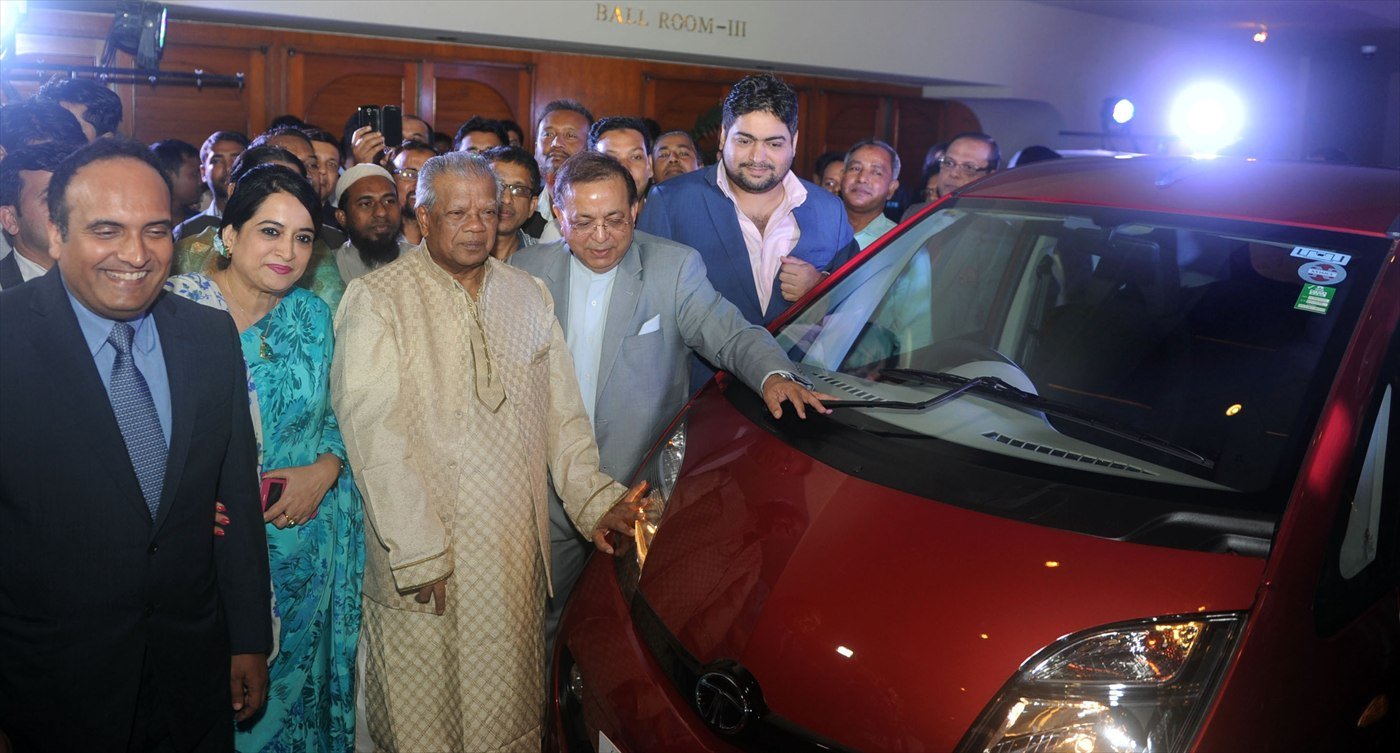
It did not sell.
It is worth being honest about why, because the failure is more instructive than the launch. The price became the brand. A car marketed as the cheapest in the world asks its buyer to announce, to every neighbour, exactly how little they could afford to spend. The family on the scooter was saving to move up in the world, and the Nano offered them a way to arrive looking like they had not. Add a difficult land dispute at the original Singur plant and a handful of early fires that made the news, and the car never recovered its story.
He kept defending the intention rather than the outcome, which was the honest position. The Nano is remembered as his most famous product and his clearest commercial miss, and both are true at once.
Twenty-One Months
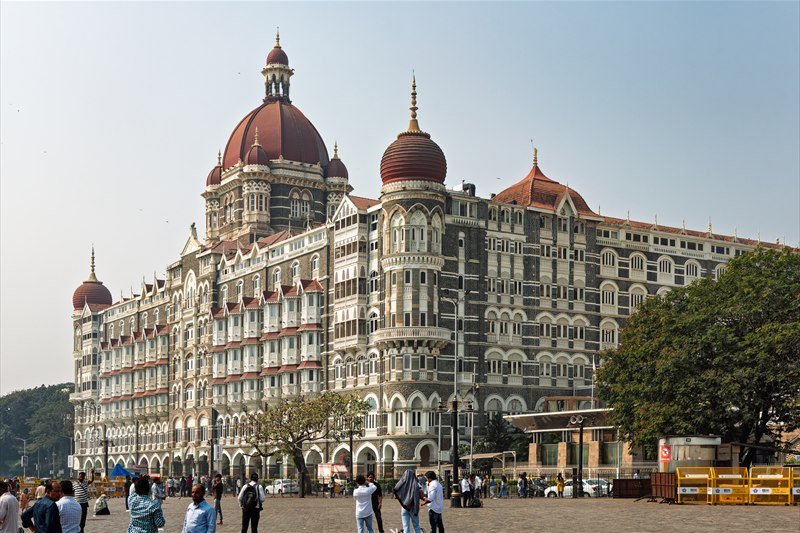
On the night of 26 November 2008, gunmen attacked targets across Mumbai. One of them was the Taj Mahal Palace, the hotel his own group had owned since it opened in 1903. Explosives and fire tore through it. Guests and staff were killed.
He was at the hotel through the siege and its aftermath, and what happened afterwards is the part that gets cited in business schools.
He said the group would rebuild every inch of it. Most of the hotel reopened within a month. The Palace wing, gutted by fire and water, took twenty-one months. The loss ran to roughly ₹400 crore.
The decision that mattered more was about people. Tata continued to pay the salaries of every employee affected, covered the families of staff who died, and did the same for people who had no employment relationship with the hotel at all — railway staff, bystanders, a vendor’s family. None of it was contractually required.
Companies write values on walls. This is one of the few documented cases of a company being handed the bill for its own and paying it without argument.
What He Did Not Keep
He stepped down as chairman of Tata Sons on 28 December 2012 — his seventy-fifth birthday, and the retirement age he had himself imposed on others two decades earlier. He returned briefly as interim chairman between October 2016 and February 2017, during the group’s public rupture with his successor.
He never married and had no children. He said he came close four times. In a business culture built on dynastic succession, the most powerful industrialist in the country left no heir — which, given that the trusts hold the shares, was structurally consistent rather than sad.
India gave him the Padma Bhushan in 2000 and the Padma Vibhushan in 2008. He spent his later years on the trusts, on start-up investments made mostly without publicity, and on a fondness for dogs that the Taj hotels quietly institutionalised.
He died on 9 October 2024 in Mumbai, aged 86, and was given a state funeral.
The measure of him is not the ₹12,000 crore or the four continents. It is that a man who controlled all of it took almost none of it, and that the structure which made that true was one he defended rather than dismantled when he had every opportunity and every legal means to do otherwise.
Common Questions
When and where was Ratan Tata born?
Who were his parents, and who raised him?
What did Ratan Tata study?
How long was he chairman of Tata Sons?
Which companies did Tata buy under him?
Was Ratan Tata married?
Who owns the Tata Group?
How This Was Written
The mark beside the headline means the same thing it does on any uncommissioned record here: every claim above is traceable to the public record, or is attributed in the sentence to the person who made it. Figures are as at the date of publication.
Photography is public domain or CC0 and is credited in the site’s image credits. Corrections are welcome and are made without argument: commissions@99founder.com.