Business profile · Spaceflight · Starbase, Texas
SpaceX
Space Exploration Technologies Corp. It was founded in 2002, lost its first three rockets, and now launches roughly three missions a week. In June 2026 it became the largest public listing in history — and it has still never made an annual profit.

Profile & fleet
At a glance
- FoundedEl Segundo, California14 Mar 2002
- FounderElon Musk · Gwynne Shotwell, president and COOAbout 22,000 staff
- HeadquartersStarbase, TexasNasdaq, 2026
What it flies and sells
- Falcon 9
- Falcon Heavy
- Starship
- Dragon
- Crew Dragon
- Starlink
- Commercial resupply
- Commercial crew
- Rideshare launches
- Satellite broadband
Six turns
-
01
2002
Founded in El Segundo with roughly $100 million of Musk’s own money from the sale of PayPal.
-
02
2008
Three Falcon 1 losses, then the fourth reaches orbit on 28 September — the first privately developed liquid-fuelled rocket to do so.
-
03
Dec 2008
NASA awards a $1.6 billion resupply contract, weeks later, with the firm nearly out of cash.
-
04
Dec 2015
A Falcon 9 first stage lands upright on a pad; a droneship landing follows in April 2016, a reflight in March 2017.
-
05
May 2020
Crew Dragon carries Doug Hurley and Bob Behnken to the ISS — the first astronauts flown to orbit by a private company.
-
06
Jun 2026
The largest public listing in history: about $75 billion raised on Nasdaq.
Reuse cut the cost of getting to orbit; Starlink invented something worth taking there. Neither works without the other.
Three rockets lost before orbit.
About 650 landings and reflights.
Still no annual profit.
Space Exploration Technologies Corp. was founded in 2002, lost its first three rockets, and now launches roughly three missions a week. In June 2026 it became the largest public listing in history. It has still never made an annual profit.
The Thing Nobody Else Did
For the first sixty years of spaceflight, the rocket was thrown away.
Every launch burned a vehicle that had cost tens of millions to build, and the industry treated this as a law of physics rather than a choice. Governments had studied reuse and abandoned it. The Space Shuttle was partly reusable and ended up costing more per flight than the expendable rockets it replaced.
In December 2015 a Falcon 9 first stage came back through the atmosphere, relit its engines and set itself down upright on a landing pad in Florida. In April 2016 another one did it on a barge in the middle of the Atlantic. In March 2017 a booster that had already flown went up a second time carrying a paying customer’s satellite.
That is the whole company in three dates. Everything else — the valuation, the constellation, the astronauts — follows from the fact that SpaceX stopped throwing the expensive part away.

El Segundo, 2002
SpaceX was founded on 14 March 2002 in El Segundo, California, by Elon Musk, with roughly $100 million of his own money from the sale of PayPal.
The first vehicle was Falcon 1, a small two-stage rocket. It flew five times between 2006 and 2009 and succeeded twice.
The first flight, in March 2006, was lost thirty-three seconds after liftoff when a corroded fitting let kerosene leak onto the engine. The second, in March 2007, reached space and then failed when propellant sloshed in the upper stage. The third, in August 2008, was lost when the two stages collided during separation.
Three launches, three total losses, and the money was gone. The fourth Falcon 1 flew on 28 September 2008 and reached orbit — the first privately developed liquid-fuelled rocket to do so.
The Contract That Saved It
The part of the story that gets left out of the mythology is that a customer rescued the company, and the customer was the American taxpayer.
NASA had already backed SpaceX in 2006 with a Commercial Orbital Transportation Services agreement worth about $396 million to develop Falcon 9 and the Dragon capsule. Then, in December 2008 — weeks after that fourth Falcon 1 flight, with the firm nearly out of cash — NASA awarded a Commercial Resupply Services contract worth $1.6 billion to fly cargo to the International Space Station.
It is worth being clear about what that was. NASA was retiring the Shuttle and needed someone to carry supplies. Rather than build another government rocket, it bought a service from a company that had flown successfully exactly once.
SpaceX is routinely held up as proof of what private enterprise can do without the state. The more accurate reading is that it is proof of what happens when a government buys outcomes instead of building hardware — and is willing to place that bet on a firm with one success to its name.
Learning to Land

Falcon 9 first flew on 4 June 2010. Dragon delivered cargo to the ISS on 22 May 2012, the first commercial spacecraft to do so.
The landings came later, and they came after a long run of failures that were filmed and published. Boosters tipped over, ran out of propellant, hit the deck at an angle and exploded. SpaceX released the footage, which was unusual and probably deliberate: a company that publishes its crashes is harder to accuse of hiding them.
The sequence that mattered: pad landing in December 2015, droneship landing in April 2016, and the first reflight of a used orbital booster in March 2017, carrying the SES-10 satellite.
Falcon Heavy — three Falcon 9 cores strapped together — first flew on 6 February 2018, carrying Musk’s own Tesla Roadster into a solar orbit as a mass simulator.
By 2026 the company has recorded close to 650 landings and reflights and launches at a cadence of roughly three missions a week. Individual boosters have flown many times each. The rocket became a vehicle you service rather than a shell you spend.
Carrying People

NASA awarded SpaceX a Commercial Crew contract in September 2014 to develop a vehicle capable of carrying astronauts.
In May 2020, Crew Dragon carried Doug Hurley and Bob Behnken to the International Space Station. It was the first time a private company had flown human beings to orbit, and the first crewed launch from American soil since the Shuttle retired in 2011.
The nine-year gap is the detail worth holding onto. For most of the 2010s, the country that landed on the Moon could not put a person into orbit without buying a seat on a Russian Soyuz. The company that ended that dependency was twelve years old.
The Business Underneath
Launch is a lumpy business. There are only so many satellites to fly, and customers order them years apart.
Starlink was the answer to that problem: instead of waiting for customers with payloads, become the customer. From 2019 SpaceX began launching its own satellites — thousands of them, in low orbit, forming a constellation that sells broadband directly to households, ships, aircraft and armies.
By 2022 more than 6,000 Starlink satellites were in orbit, and the number has grown steadily since. The constellation is now the majority of SpaceX’s launch manifest and the majority of its revenue.
Strategically it is the more interesting half of the company. Reuse cut the cost of getting to orbit; Starlink invented something worth taking there. Neither works without the other, and it is the pairing rather than either piece that explains the valuation.
It has also made SpaceX a subject of genuine dispute — over the crowding of low Earth orbit, over the effect of thousands of bright satellites on ground-based astronomy, and over the fact that a single privately controlled network has become critical infrastructure in active war zones. Those objections are not settled, and this profile does not settle them.
The Next Vehicle
Starship is the vehicle intended to replace everything above: a fully reusable two-stage system, far larger than Falcon 9, designed to carry heavy payloads and eventually people beyond Earth orbit.
The first integrated flight test flew on 20 April 2023 and was destroyed minutes into flight. Several more test flights followed the same pattern — partial success, vehicle lost, data gathered, next one built.
On 22 May 2026, Flight 12 became the first Starship test to carry a payload into orbit. Flight 13 followed on 24 July 2026.
Starship is still a test programme. It is the largest single bet the company has made, and unlike the Falcon 9 landings it does not yet have a commercial record to point at.
What It Earns, What It Loses
On 11 June 2026 SpaceX sold 555.6 million shares at $135 each, raising $75 billion — the largest initial public offering ever recorded — at a valuation of $1.77 trillion. The shares closed their first day at $161, up 19 per cent, putting the market capitalisation near $2.1 trillion.
That listing followed the February 2026 all-stock merger in which xAI became a wholly owned subsidiary, combining a $1 trillion rocket company with a $250 billion artificial-intelligence company.
Now the part that a valuation headline hides.
Revenue for 2025 was $18.67 billion, up 33 per cent on the year before. The net loss for 2025 was $4.94 billion. In the first quarter of 2026, revenue rose 15 per cent to $4.69 billion and the company lost a further $4.28 billion.
SpaceX is growing fast and spending faster, mostly on Starship and on the constellation. That is a defensible position for a company building infrastructure with a long payback, and it is also the plainest fact about it: the most valuable listing in history belongs to a business that has not yet shown it can make money in a year.
Who Actually Controls It
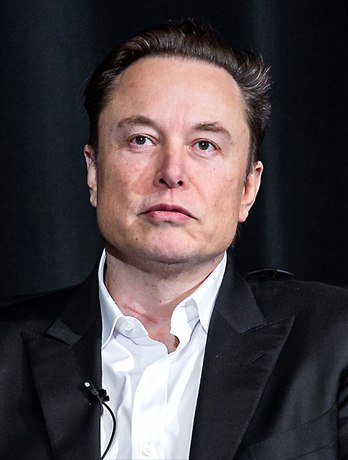
Elon Musk is chief executive, chairman and chief technology officer. Gwynne Shotwell has been president and chief operating officer since 2008 and runs the commercial business — the contracts, the customers and the launch operation.
The ownership structure is the thing a new shareholder should read twice. Musk holds roughly half the equity but, through super-voting stock, more than 82 per cent of the voting power. The company is listed; control of it is not.
That arrangement is legal, disclosed and increasingly common in founder-led listings. It also means the ordinary protections a public shareholder expects — replacing a board, forcing a strategy change, blocking a related-party deal — are, in practice, unavailable here.
The founder’s own record is written separately: Elon Musk – The Man Who Kept Betting Everything.
Common Questions
When was SpaceX founded, and by whom?
What was the first SpaceX rocket to reach orbit?
When did SpaceX first land a rocket?
Has SpaceX carried astronauts?
How much is SpaceX worth?
Is SpaceX profitable?
Who controls SpaceX after the IPO?
How This Was Written
Figures are as at the date of publication. A company launching weekly and reporting quarterly dates quickly; corrections and updates are welcome.
Photography is public domain or CC0 and is credited in the site’s image credits. Corrections are made without argument: commissions@99founder.com.