Founder profileSpace · cars · AI
Fact-checked profile
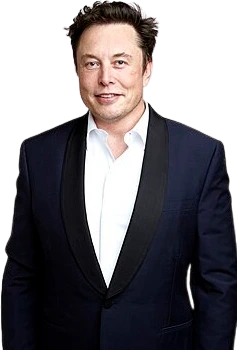
The making of
Elon Musk
Founder, SpaceX and xAI
Co-founder, Tesla
Born in Pretoria in 1971. He sold his first software at twelve, was removed as chief executive of two companies he had built, and spent both fortunes on rockets and cars.
South Africa · Canada · United States
Three rockets failed.
The fourth reached orbit.
- 12Age at his
first sale - 3Rockets lost
before orbit - 6pmChristmas Eve,
2008
Three rockets, then one.
View the companiesLife & companies
At a glance
- BornPretoria, South Africa28 June 1971
- CitizenshipSouth Africa · Canada · United StatesThree
- EducatedQueen’s University, then the University of PennsylvaniaUniversities
The companies in this record
- Zip2
- X.com
- PayPal
- SpaceX
- Starlink
- Tesla
- Neuralink
- The Boring Company
- xAI
- X
Six turns
-
01
Blastar, 1983
A BASIC space-shooter written at twelve and sold to a magazine for about $500.
-
02
Zip2, 1995
Founded with his brother Kimbal and Greg Kouri. Compaq bought it in 1999 for $307 million.
-
03
X.com, 1999
Merged with Confinity in 2000; eBay bought PayPal in 2002 for $1.5 billion in stock.
-
04
SpaceX, 2002
About $100 million of his own money — enough for three launches. He needed four.
-
05
Tesla, 2004
He led the Series A with $6.35 million and became chairman; chief executive from 2008.
-
06
Christmas Eve, 2008
Tesla’s rescue financing closed at six in the evening, about three days from bankruptcy.
Persistence is very important. You should not give up unless you are forced to give up.
Reasons from first principles.
Treats failure as information.
Stops only when forced to.
Pretoria, June 1971
Elon Reeve Musk was born on 28 June 1971 in Pretoria, South Africa.
His father, Errol Musk, was an electromechanical engineer, a pilot, and at times a property developer. His mother, Maye Musk, was born in Saskatchewan, Canada, and worked as a model and a dietitian — two careers she was still running decades later. There were three children: Elon, his brother Kimbal, and his sister Tosca.
The parents divorced in 1979, when Elon was eight. He went to live with his father, a decision he has since described as a mistake and one of the harder things he has had to talk about publicly.
School was not kind to him. He was small, bookish and conspicuously literal, and he was bullied badly enough at one point to end up in hospital. He read instead — encyclopaedias, science fiction, anything with a system in it — and by ten he had found the thing that would define the rest of his life.
The Game He Sold at Twelve
He taught himself to program from the manual that came with a Commodore VIC-20.
In 1983, aged twelve, he wrote a BASIC space-shooter called Blastar and sold the listing to a trade magazine for around $500.
It is a small fact that gets repeated a lot, and usually for the wrong reason. The interesting part is not that a child earned $500. It is that he had already worked out the whole sequence — build the thing, find someone who wants it, get paid — at an age when most people have not yet been told that sequence exists.
Leaving, With No Way Back
At seventeen he left South Africa, partly to avoid compulsory military service under apartheid. Because his mother was Canadian, he could claim Canadian citizenship — so Canada is where he went, in 1989, with very little money and no fixed plan.
He spent five months at the University of Pretoria before leaving, then worked his way across Canada on farms and in a lumber mill. He enrolled at Queen’s University in Kingston, Ontario, in 1990, and transferred to the University of Pennsylvania in 1992, where he read physics and economics.
In 1995 he was accepted to a graduate materials science programme at Stanford and never took up the place. The internet was two years old commercially and he had decided, correctly, that it was not going to wait for him to finish a doctorate.
Zip2: Sleeping at the Office
Zip2 was founded in 1995 with his brother Kimbal and a third partner, Greg Kouri. The product was unglamorous and well-timed: online city guides and searchable business directories, sold to newspapers that could see the web coming and had no idea what to do about it.
The founding conditions have become part of the folklore, and they are true. The brothers rented a small office rather than an apartment, slept there, and washed at a YMCA down the road. There was one computer; the website ran on it during the day and Elon wrote code on it at night.
Compaq bought Zip2 in 1999 for $307 million in cash. Musk held about seven per cent and walked away with roughly $22 million.
He was twenty-seven, and he had just learned the lesson that shaped everything after: he had been pushed out of the chief executive’s job at his own company by his own investors. Money was not the same thing as control.
X.com, and Losing the Company
He put most of the Zip2 money straight into the next thing. X.com launched in 1999 as an online bank — an idea that sounded reckless at the time and merely early in hindsight.
In 2000 X.com merged with Confinity, a rival founded by Peter Thiel and Max Levchin whose money-transfer product was called PayPal. The merged company fought internally over almost everything, including which technology stack to keep and what the company should be called. While Musk was on a flight to Australia, the board removed him as chief executive.
He did not sell his shares. He stayed on the board, kept backing the company he had just been fired from, and when eBay bought PayPal in 2002 for $1.5 billion in stock, Musk was the largest shareholder. His share came to about $175.8 million.
When something is important enough, you do it even if the odds are not in your favor. Elon Musk
Twice now he had built a company, been removed from running it, and made a fortune anyway. Most people would have taken the second fortune and stopped. He spent it on rockets and cars — two industries with famously brutal capital requirements and no recent history of newcomers surviving.
SpaceX: Three Rockets, Then One
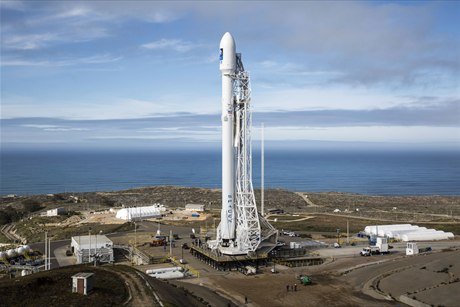
Space Exploration Technologies was founded in 2002. Musk put in around $100 million of his own money — the great majority of what he had — which he has said was enough to fund roughly three launches.
He needed four.
The first Falcon 1 lifted off in March 2006 and was lost thirty-three seconds later, when a corroded aluminium fitting let kerosene leak onto the engine and it caught fire. The second, in March 2007, flew far better — the first stage burned clean, the vehicle passed a hundred kilometres — and then the second stage failed as its propellant sloshed. The third, in August 2008, was lost when the two stages collided during separation.
Three launches. Three total losses. The money was gone.
The fourth Falcon 1 flew on 28 September 2008 and reached orbit — the first privately developed liquid-fuelled rocket ever to do so. There were parts on that rocket that had been flown to the launch site as hand luggage because there was no budget left for freight.
Had it failed, there would have been no payroll, no Hawthorne factory, and no Falcon 9. The company that now launches most of the world’s payload mass to orbit was, that September, one flight from being a footnote.
Tesla: The Company He Did Not Found
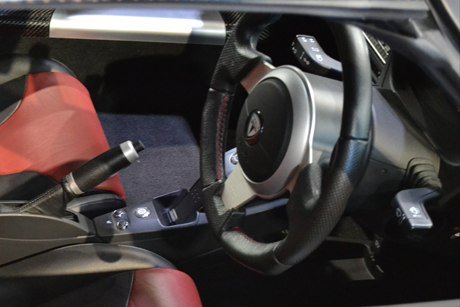
This is the part of the record most often reported wrongly, so it is worth stating plainly.
Tesla Motors was incorporated in July 2003 by Martin Eberhard and Marc Tarpenning. Musk did not found it. He led its Series A round in February 2004, putting in $6.35 million, and became chairman of the board.
He became chief executive in 2008, in the middle of the crisis described below. Eberhard sued in 2009 over how the company’s origins were being described; the case was settled, and the settlement established that five people — Eberhard, Tarpenning, JB Straubel, Ian Wright and Musk — may each call themselves a co-founder.
The first product was the Roadster, an electric sports car built on a Lotus chassis. It was late, it cost far more to build than planned, and it arrived in the worst month in living memory to be selling a $100,000 car to anybody.
2008: The Year It Nearly Ended
By the second half of 2008 both companies were dying at once, and the financial system was taking the rest of the economy down with them.
SpaceX had lost three rockets. Tesla was burning cash on a car it could not build profitably. Musk’s own fortune — the PayPal money, all of it — was nearly spent. He has said he was borrowing money from friends to pay his rent, and that he no longer owned a house.
The decision he faced that autumn is the one worth remembering, because it is the opposite of what a rational portfolio manager would have done.
I could either split the funds I had between the two companies or focus them on one company with certain death for the other … I decided in the end to split what I had to try to keep both companies alive. Elon Musk
Falcon 1 reached orbit on 28 September. NASA awarded SpaceX a resupply contract that December. And Tesla’s rescue financing — a round Musk has described as closing in the last hour of the last day it was possible — completed at six in the evening on Christmas Eve, 2008. He has put the company at about three days from bankruptcy.
Both companies survived that quarter by a margin measured in hours.
Production Hell
The second near-death is less dramatic and more instructive, because it was self-inflicted and he said so.
The Model 3 was meant to be the affordable car that made Tesla a real manufacturer rather than a niche one. Through 2017 and into 2018 the factory could not build it fast enough. Musk called the period “production hell”, slept on the factory floor, and later said Tesla came within roughly a month of running out of money.
His own diagnosis was blunt:
Yes, excessive automation at Tesla was a mistake. To be precise, my mistake. Humans are underrated. Elon Musk, 2018
He had tried to automate an assembly line to a degree nobody had managed, discovered that people were better at parts of it than robots were, and reversed himself in public. Whatever else is true of him, the correction was fast and it was attributed to himself.
The Companies Now
The list is longer than most people can name from memory.
SpaceX (2002) launches and lands orbital rockets and operates Starlink. Tesla (2003; Musk from 2004) makes electric vehicles, batteries and solar hardware. SolarCity (2006), founded by his cousins with his backing, was bought by Tesla in 2016 for about $2 billion. Neuralink (2016) builds brain–computer interfaces. The Boring Company (2017) digs tunnels. xAI (2023) builds artificial intelligence. And X — bought as Twitter in October 2022 for about $44 billion and renamed in 2023 — is the platform he uses to say most of this himself.
In February 2026 SpaceX and xAI were merged in a deal valuing SpaceX at $1 trillion and xAI at $250 billion — a combined $1.25 trillion, and the largest merger ever recorded. Musk’s stated reason was to build data centres in orbit. Four months later, on 11 June 2026, the combined company listed on Nasdaq — raising $75 billion at a $1.77 trillion valuation, the largest initial public offering ever recorded.
It is worth holding that figure next to the September of 2008, when the same man was working out whether he could afford a fourth rocket.
Why He Does Not Stop
The question people actually want answered is not what he built. It is why he kept going when the evidence said to stop.
His own account is not mystical. He reasons from first principles — breaking a problem down to what is physically true rather than to what is normally done — and he treats failure as information rather than as verdict. Three lost rockets told him what was wrong with the separation mechanism. They did not tell him rockets were impossible.
The rule he states most often is the plainest one:
Persistence is very important. You should not give up unless you are forced to give up. Elon Musk
Note the qualifier. It is not a promise that persistence wins. It is a distinction between choosing to stop and being made to stop — and in 2008 he was closer to the second than almost anyone outside the company understood.
There is a less flattering reading, and it belongs here too: the same refusal to accept a constraint that saved Tesla is the one that produces missed deadlines, public fights and promises that arrive years late. The trait is not selectively good. It is one trait, and it does both things.
What is not in dispute is the arithmetic. Two companies, both hours from the end in the same quarter, both still standing eighteen years later — one of them the largest merger in recorded history.
How This Was Written
The mark beside the headline means something different here from the one on a commissioned page. On a commissioned profile it records that the subject confirmed the details before publication. On this one it records only what the desk can vouch for itself: every claim above is traceable to the public record, or is attributed in the sentence to the person who made it.
Photography is public domain or CC0 and is credited in the site’s image credits. Corrections are welcome and are made without argument: commissions@99founder.com.