Sony
Sony makes PlayStation consoles, more of the world’s camera image sensors than anyone else, and films, music and anime. It began in 1945 as a radio-repair business in a bomb-damaged department store in Tokyo.
The Order Morita Turned Down
In the mid-1950s the small Japanese company that would become Sony took its transistor radio to the United States in search of buyers. The watchmaker Bulova offered to order 100,000 of them — far more than the company could then make — on one condition. The radios would carry the Bulova name.
Akio Morita, the co-founder handling the sale, refused. As he later told it, Bulova’s people pointed out that nobody in America had heard of his company. He answered, in effect, that nobody had heard of Bulova once either, and that he intended his own name to be known fifty years on.
It is a small story with a large consequence. Japanese manufacturers of the period were expected to make goods for Western brands to sell. Sony decided, while it was still tiny and short of money, that it would sell under its own name — and then spent the next seventy years making that name worth something.
A Repair Shop in a Bombed Department Store
In September 1945, weeks after the war ended, the engineer Masaru Ibuka opened a radio-repair shop in the Shirokiya department store building in Tokyo’s Nihonbashi district, which had been damaged by bombing. On 7 May 1946 he and Akio Morita, a younger physicist he had worked with during the war, founded Tokyo Tsushin Kogyo — Tokyo Telecommunications Engineering.
They were engineers looking for something to engineer. One early attempt, an electric rice cooker, never worked well enough to sell. The first real product was a tape recorder, the Type-G of 1950 — the first made in Japan, and heavy, expensive and hard to sell.
The division of labour between the two founders lasted their lives. Ibuka was the inventor, drawn to whatever was technically hardest. Morita was the salesman and strategist, and the one who went abroad.
Licensing the Transistor
In the early 1950s Ibuka, travelling in the United States, heard about the transistor, invented at Bell Labs, and set about licensing it. Bell Labs agreed — and suggested the Japanese company use it for hearing aids, the application transistors were then thought good for, warning that radios would be difficult.
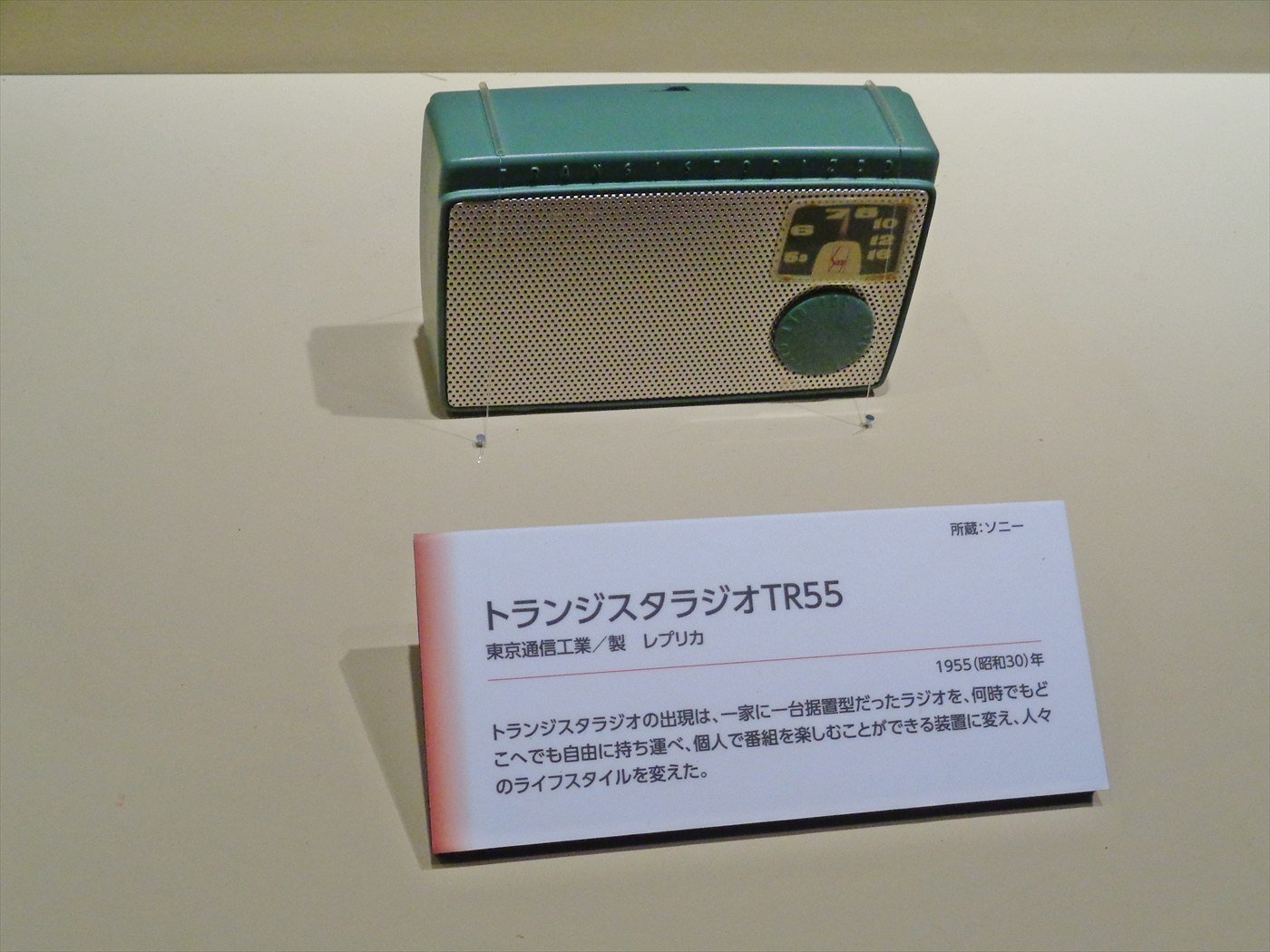
Tokyo Tsushin Kogyo made a radio anyway. The TR-55, released in August 1955, was Japan’s first commercially produced transistor radio. In 1957 came the TR-63, then the smallest transistor radio in commercial production, sold with an invented English word: “pocketable”.
In January 1958 the company changed its name to match the brand, because customers outside Japan struggled with the original. “Sony” joined sonus, Latin for sound, with “sonny”, then everyday American slang. In 1961 it became the first Japanese company listed on the New York Stock Exchange, through American depositary receipts.
Trinitron, Betamax and the Walkman
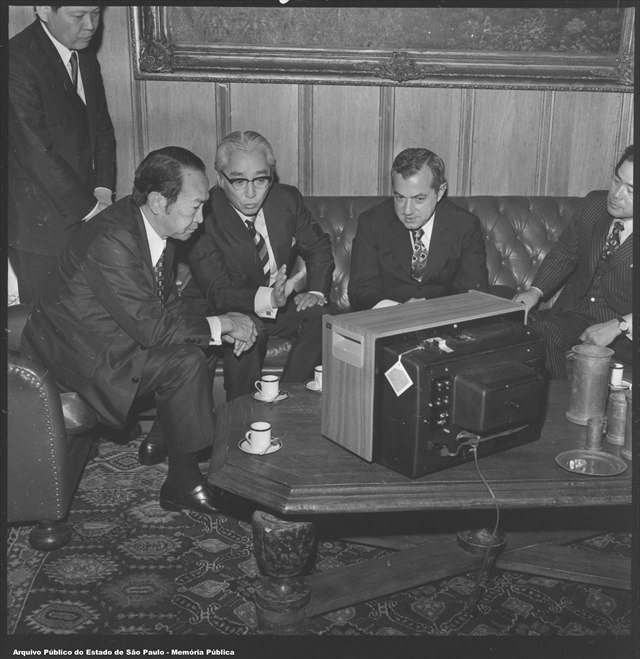
Through the 1960s and 1970s Sony built a reputation for making things smaller and better than anyone else. The Trinitron colour television, introduced in 1968, set the standard for picture quality for a generation.
Not every bet landed. In 1975 Sony launched Betamax, its home video-cassette format, and over the following decade lost the format war to JVC’s VHS. Being early and well engineered was not enough when rivals backed the other standard.
Then, in 1979, came the Walkman — the first portable stereo cassette player, a machine that played music but could not record it. It created a habit, carrying your own music everywhere, that the iPod and the smartphone would later inherit. In 2025 the original model was shown at New York’s Museum of Modern Art as one of the turning points in the history of design.
Sony and Philips also developed the compact disc together, and it reached shops in the early 1980s.
Buying Hollywood
By the late 1980s Sony had concluded that hardware alone was not enough. Whoever owned the films and the music would influence which machines people bought; Betamax had taught that lesson the hard way.
Under Norio Ohga, a trained opera singer who rose to president and in 1989 succeeded Morita as chief executive, Sony bought CBS Records in 1988 and Columbia Pictures in 1989, the latter for $3.4 billion.
The film business was badly managed for years and cost Sony heavily; for a time it was the purchase critics pointed to as proof of Japanese overreach in America. Over the long run the logic held. Sony Music and Sony Pictures are now among the group’s steadier businesses, and the owner of the Spider-Man film rights does not regret owning a studio.
The Console Nintendo Walked Away From
The PlayStation began as someone else’s accessory.
From 1988 Sony and Nintendo worked together on a CD-ROM version of Nintendo’s Super Famicom console. Sony announced the project at the Consumer Electronics Show in 1991. The next day Nintendo announced that it was breaking off the partnership and working with Philips instead.
Ohga was furious, and handed the project to Ken Kutaragi, an engineer who had pushed for Sony to enter video games against considerable internal resistance. At a meeting in June 1992 Kutaragi showed a CD-ROM system able to render 3D graphics, and Ohga approved a console of Sony’s own.
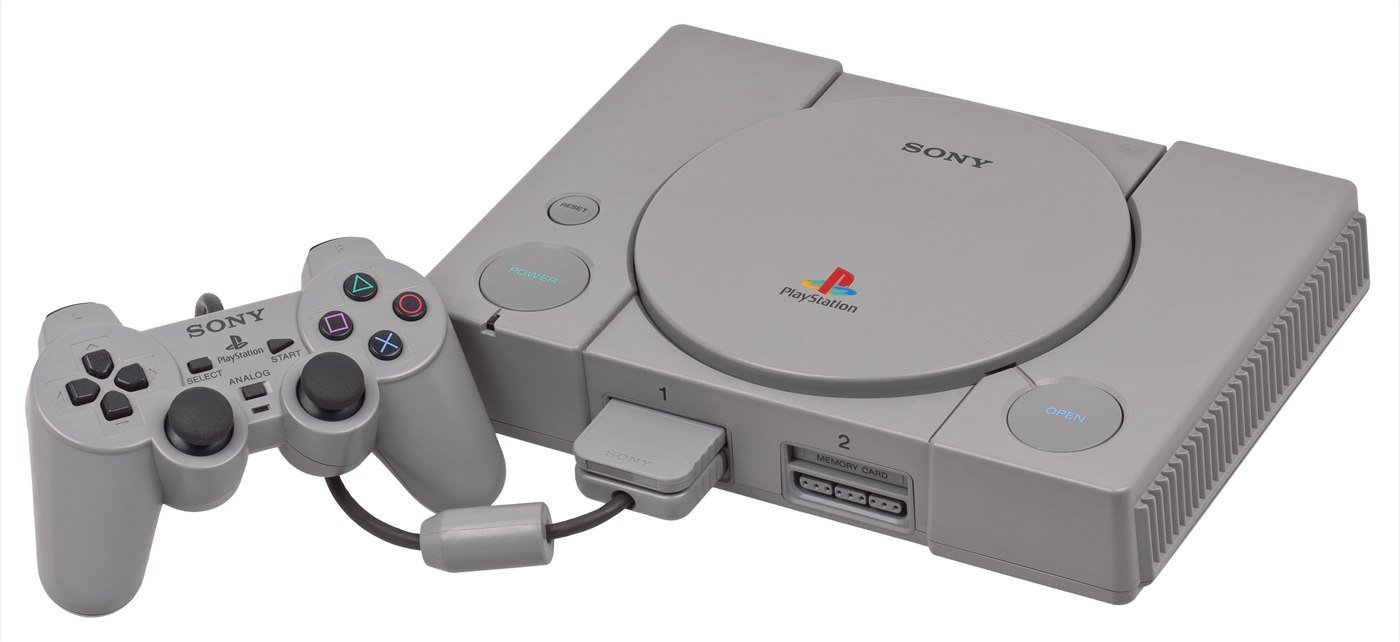
The PlayStation launched in 1994 and comfortably outsold Nintendo’s next machine. The PlayStation 2 of 2000 did even better. Three decades on, games are Sony’s largest business, and the PlayStation 5 had sold about 95 million units by 2026. A partnership Nintendo ended in public turned out to be the most valuable thing that ever happened to its rival.
The Lost Years
The 2000s went badly. Apple’s iPod took the portable-music market that the Walkman had created, and South Korean manufacturers took the lead in flat-screen televisions.
In 2005 Howard Stringer, a Welsh-born American executive, became the first foreigner to run a major Japanese electronics company. He cut 9,000 jobs and revived the entertainment businesses, but could not repair electronics. Sony lost money for four financial years running, to March 2012.
His successor, Kazuo Hirai, launched a programme he called “One Sony” and began selling what could not be saved, including the VAIO personal-computer business. Then, in late 2014, Sony Pictures was hacked by a group calling itself the Guardians of Peace, weeks before the release of The Interview, a comedy about North Korea’s leader. Emails, salaries and unreleased films were published online.
The Company Behind the Camera
The Sony that emerged is less visible than the one that made the Walkman, and more profitable.
Its most important hardware is now something most customers never see: the image sensors inside other companies’ phones and cameras. In 2020 Sony held about 55 per cent of the global image-sensor market. Around it sit the businesses built on content — PlayStation, Sony Music, Sony Pictures and the anime service Crunchyroll — which earn money every time something is played, heard or watched.
In April 2021 the company renamed itself Sony Group Corporation, and in 2025 it spun off its financial-services arm, keeping a 20 per cent stake. For the 2025 financial year Sony Group reported revenue of about ¥12.48 trillion and net income of about ¥1 trillion, with some 112,300 employees. Hiroki Totoki is chief executive, and Kenichiro Yoshida executive chairman.
What Could Still Go Wrong
Three things stand out.
A retreat from its own products. Sony’s share of the world television market had fallen below 2 per cent by 2025, and in 2026 it agreed to form a joint venture with China’s TCL for its television and home-audio business. The same year its electric-car project with Honda, Afeela, was cancelled. The company that defined consumer electronics is steadily leaving much of it.
Goodwill that can be spent. PlayStation depends on the loyalty of players. In July 2026 Sony announced plans to phase out physical disc production for PlayStation from January 2028, and met a wide public backlash over whether people would still own the games they buy.
Concentration in sensors. A large part of Sony’s chip business depends on a small number of smartphone makers. If one of them changes supplier or designs its own sensors, the effect is immediate.
Seventy years ago Morita turned down an order larger than his factory because it would have hidden the name. The name survived. What it stands for has changed more than once, and is changing again.
Common Questions
Who founded Sony, and when?
Where does the name Sony come from?
What was Sony’s first transistor radio?
How did the PlayStation begin?
What happened to Betamax?
How big is Sony today?
How This Was Written
Figures are as at the date of publication. Sony’s financial year ends in March; corrections are welcome.
Photography is public domain or CC0 and is credited in the site’s image credits. Corrections: commissions@99founder.com.